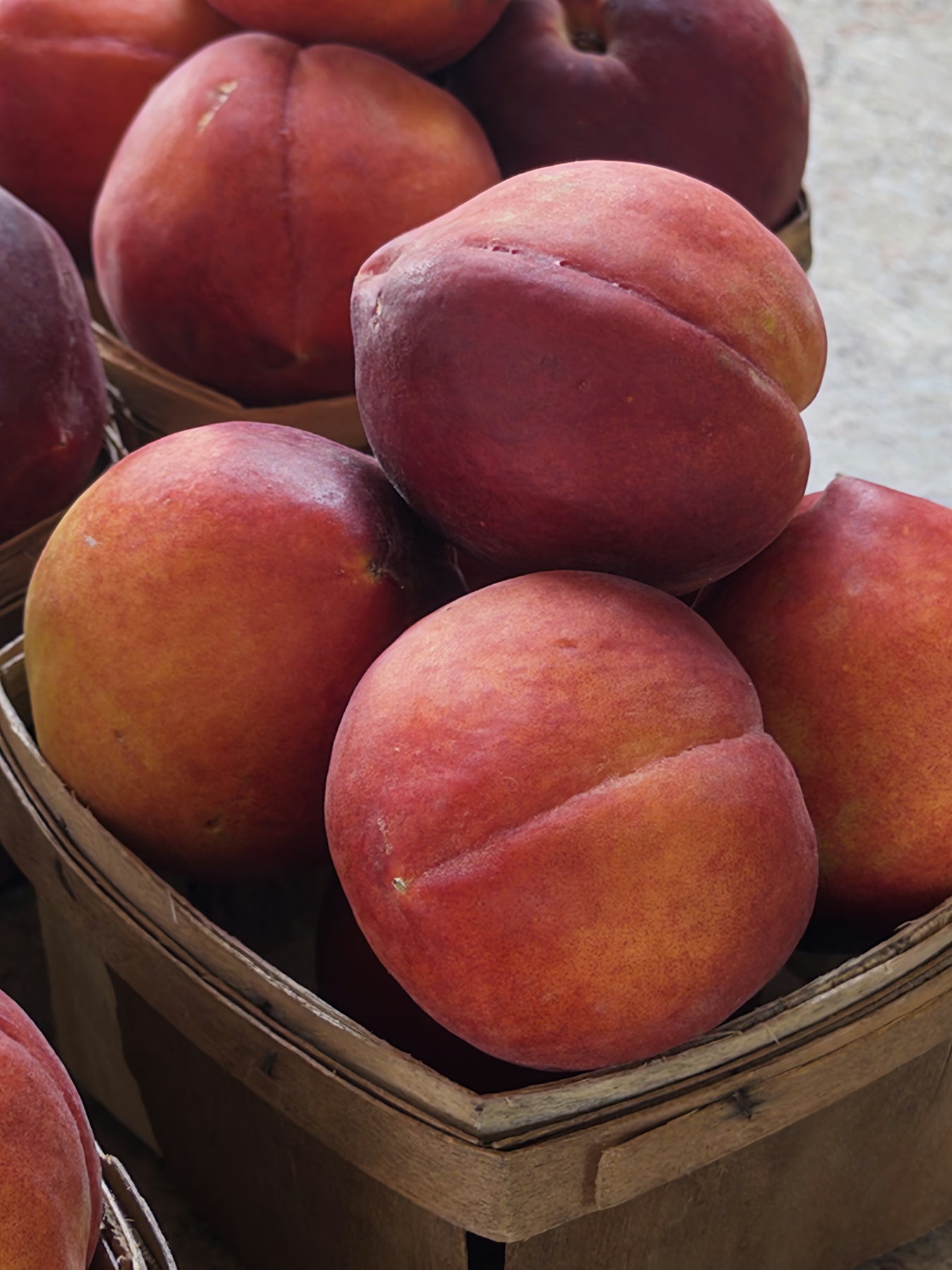
Farmers markets are one of the best ways to understand a place. They make food feel human again. You see the berries in their little cartons, the greens still full of life, the bread from the bakery table, the eggs from a farm you can name. A good market is not just a place to shop. It is a reminder that food has people behind it.
But in Hudson County, even people who love farmers markets can miss them. The hours are narrow. Some markets happen during work, errands, naps, sports, train delays, parking stress, or a packed weekend. If you live in Hoboken or Jersey City, a market may be close on paper and still hard to use in real life.
The problem is not interest. It is access.
Searches like farm stand near me, best farmers market near me, produce market near me, farm markets near me, produce stands near me, vegetable stands near me, and fruit markets near me all point to the same need: people want fresher food and a closer connection to local growers. They are not necessarily looking for a giant grocery run. They are looking for food that feels alive, seasonal, and worth bringing home.
The challenge is that farm stands and farmers markets are built around specific places and specific windows of time. That is part of their charm, but it is also the reason many busy households miss out. If the market is open while you are working, commuting, caring for kids, or already committed somewhere else, fresh local food becomes something you meant to buy instead of something that actually makes it into your kitchen.
Why farmers markets are still important
Farmers markets create trust. They help small farms and food businesses reach people directly. They make seasonality visible. They remind shoppers that tomatoes are not just tomatoes, bread is not just bread, and eggs are not just a carton on a shelf. The best farmers markets let people ask questions, taste what is new, and build a relationship with the food system around them.
That relationship matters for New Jersey farms, bakeries, pantry makers, and local food businesses. It also matters for neighborhoods. When people buy closer to home, more of the story stays visible: who grew it, who baked it, who packed it, and why it tastes different from something that traveled through a long chain of middlemen.
The gap Common Table is trying to fill
Common Table is not trying to replace farmers markets. A market day has its own energy, and people should go when they can. Common Table is for the weeks when you cannot make the market but still want the spirit of one: seasonal produce, useful staples, and clear attribution to the farms and small businesses behind the box.
Think of it as a farmers market in a box. Each drop brings together fresh produce, fruit when available, vegetables, eggs, bread, spices, pantry goods, and add-ons from New Jersey farms, bakeries, local growers, and small food businesses. Common Table curates the pieces into one simpler local food box and delivers it to your doorstep.
What makes a farmers market in a box useful?
A good box should not feel random. It should feel like someone thought about how people actually cook during the week. That means a mix of fresh vegetables, fruit when it makes sense, eggs or bread when available, herbs or spices that make the box easier to use, and notes that tell you where everything came from.
It should also be honest. Seasonal food changes. Farms have good weeks and difficult weeks. Weather changes harvests. Bakeries and small makers have capacity limits. A local food box should leave room for that reality while still giving members something fresh, practical, and connected.
For Hoboken, Jersey City, and Weehawken households
Hudson County is dense, busy, and full of people who care about good food. The opportunity is not convincing people that fresh produce matters. They already know. The opportunity is making fresh local food easier to access between work, family, commuting, and everyday life.
That is why Common Table focuses on biweekly doorstep delivery and direct relationships with partners. You can see the Get a Box, meet the farms and small food businesses on the Local Partners page, and read the FAQ before joining.
A better bridge to local food
The goal is not to make local food feel precious or complicated. It is to make it easier to bring home. Farmers markets, farm stands, produce markets, and local growers are still the heart of the story. Common Table is simply another bridge: a practical way for neighbors to buy closer to home when the market schedule does not line up with real life.
If you have ever searched for fresh produce near me and wished the answer felt more personal, Common Table is being built for that moment.