There is a reason people keep searching for farm stand near me, produce market near me, fruit markets near me, vegetable stands near me, best farmers market near me, and organic farmers markets near me. Grocery shopping has become efficient, but often impersonal. The food may be convenient, but the story is hard to see. Where did it come from? Who grew it? How long has it been moving through the system? Why does one peach taste like summer and another taste like a placeholder?
Common Table exists because those questions matter. We believe fresh food should be easier to access, but not stripped of its roots. The goal is not to make local food precious or intimidating. The goal is to make it practical: a seasonal box that helps neighbors bring home produce, pantry staples, and add-ons from farms, bakeries, local producers, and small food businesses.
Why fresh produce feels different when it is closer to home
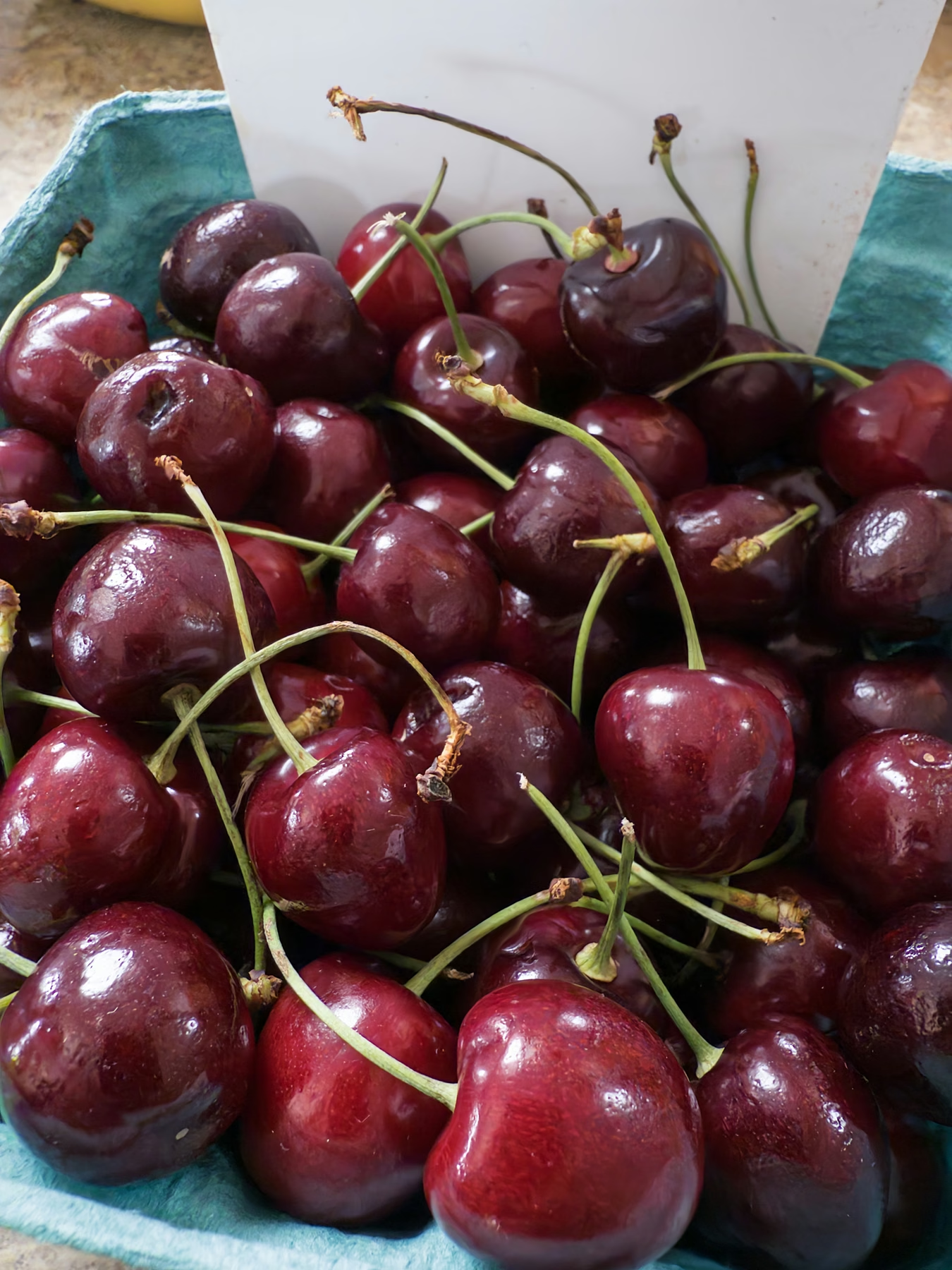
Fresh produce has a rhythm. Tomatoes do not peak because a spreadsheet says they should. Peaches, cherries, greens, squash, herbs, and berries each have their own moment. When food is picked closer to that moment, it usually tastes brighter and feels more alive in the kitchen.
That is what people are looking for when they search for local produce near me or farm fresh produce near me. They want food that still has some personality. They want vegetables that can carry a simple dinner, fruit that actually smells ripe, eggs worth building breakfast around, and bread that feels like someone made it with care.
Farmers markets are important, but they are not always easy
Farmers markets are one of the best ways to meet local food face to face. They give small farms and food makers a place to show up directly. They let shoppers ask questions, taste the season, and learn from the people closest to the food.
But in Hudson County, access is not only about distance. A market can be nearby and still be hard to use. Hours can be narrow. Some markets happen during work, daycare pickup, weekend plans, train delays, errands, or the one quiet hour you finally have at home. For many households, the issue is not whether they care about local food. They do. The issue is whether the market schedule lines up with real life.
That is where a farm box or produce box can help. It does not replace the farmers market. It gives people another way to participate when they cannot make it to the market that week.
What to expect from a good local food box
A good local food box should feel useful, not random. It should help you cook, snack, share, and plan without requiring a full-season commitment or a complicated membership model. It should also tell you where the food came from, because attribution is part of the value. Knowing the farms, bakeries, producers, and small businesses behind the box makes the food feel less anonymous.
For Common Table, that means each drop is built around seasonal availability and partner relationships. A box may include vegetables, fruit when available, herbs, eggs, bread, spices, pantry goods, or optional add-ons. The exact mix can change because local food changes. Weather changes harvests. Farms have strong weeks and difficult weeks. A bakery may have capacity one week and not the next. That flexibility is not a flaw. It is part of working closer to the source.
Seasonal eating does not have to be complicated
Eating seasonally sounds romantic until you are standing in your kitchen wondering what to do with a pile of greens or an unfamiliar squash. The best local food experiences make that easier. They give people enough context to feel confident: what is in the box, where it came from, and simple ways to use it.
In spring, that might mean greens, asparagus, herbs, radishes, or strawberries. In summer, it might mean tomatoes, peaches, berries, squash, peppers, cucumbers, or corn. Fall brings apples, pumpkins, root vegetables, and heartier cooking. Winter can still offer kale, sweet potatoes, storage crops, citrus, pantry goods, bread, eggs, and other staples that keep the table grounded.
Common Table is built for that kind of practical seasonality. Not a museum of perfect vegetables. Not a performative grocery haul. Just good food with a little more care behind it.
How to shop local when time is tight
If you love farmers markets, keep going when you can. Arrive early for the best selection. Bring bags. Ask questions. Follow your favorite markets and vendors on Instagram for weekly updates. Talk to neighbors about what they are buying and cooking. These habits make local food more visible and more rewarding.
When the timing does not work, look for flexible options that still support the local food system: a produce box, a farm share alternative, doorstep delivery, or a direct-to-community food service. The important thing is not whether every purchase happens in the same format. The important thing is creating more ways for farms, producers, bakers, makers, and neighbors to find each other.
Why this matters for Hoboken, Jersey City, and Weehawken
Hudson County is dense, busy, and full of people who care about food. There are families trying to cook more often, commuters trying to make better choices, neighbors looking for healthy food near me, and people who want to support New Jersey farms without spending their whole weekend organizing grocery logistics.
Common Table is one small answer to that reality. We curate biweekly drops, work with local partners, and keep the focus on useful food. We want members to know more than what is in the box. We want them to know who helped fill it.
A farmers market feeling, packed for real life
The best local food has a sense of place. It reminds you that eating is not only a transaction. It is a relationship with land, labor, neighbors, weather, skill, timing, and care. A farmers market captures that beautifully. A Common Table box tries to carry some of that same feeling into a format that works for busy households.
So the next time you search for fresh produce near me, produce stands near me, farm markets near me, or local food near me, think beyond the closest grocery aisle. There may be a better way to eat closer to home: one box, one drop, one table at a time.